MM logo white 1
MM logo red
Image description is not available

How do you choose the right air purifier?

Bram24 MARCH 2026
A relaxed couple sits on a bright sofa with a tablet, while a modern air purifier on the coffee table quietly refreshes the living room air.

An air purifier helps improve the air quality in your home by filtering dust, pollen, odours and other small particles from the air. But which air purifier is best suited to your home? Discover how air purifiers work, which technologies are available and what you should take into account when making your choice, such as filters, room size, noise level and smart features.

What is an air purifier?

Top view of a spacious living room where an air purifier sends vivid airflow around the corner sofa and table, cleaning the entire space.

An air purifier is a device that draws in air from the room, cleans it and then blows it back out into the space. Many air purifiers use different technologies to purify the air:

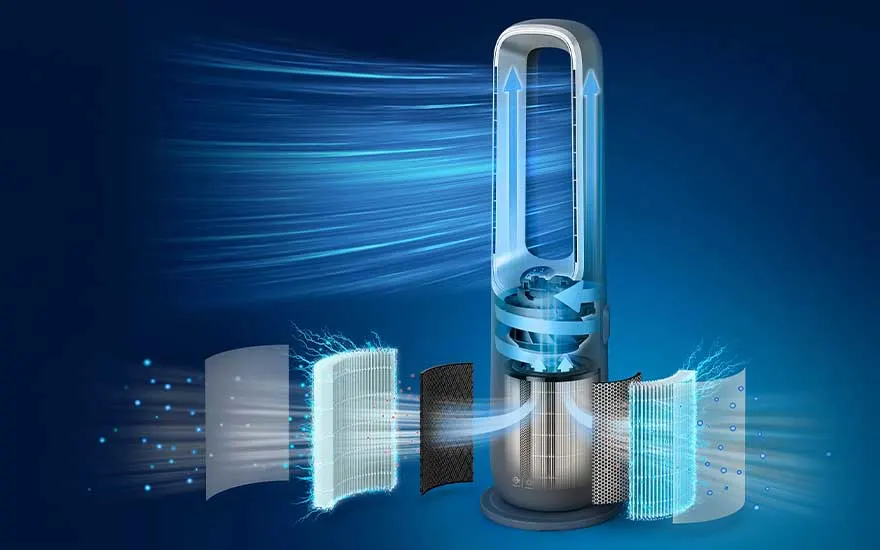
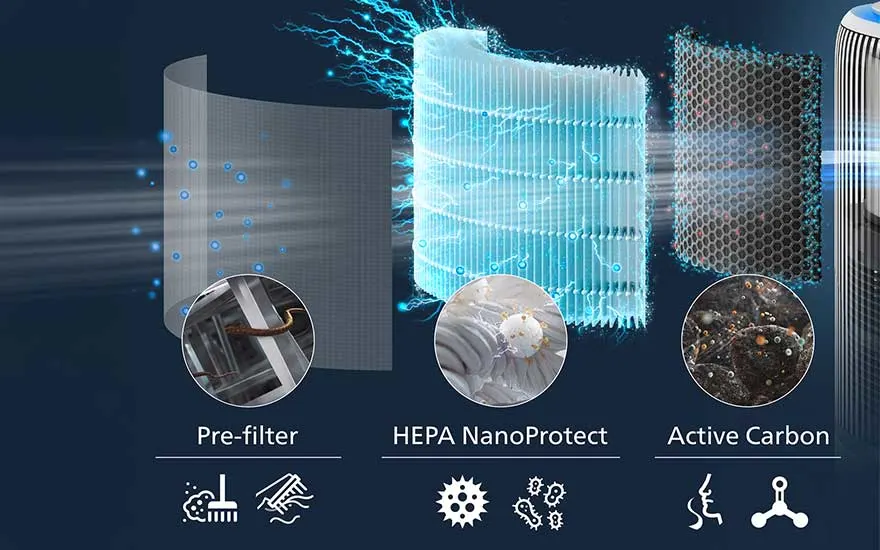
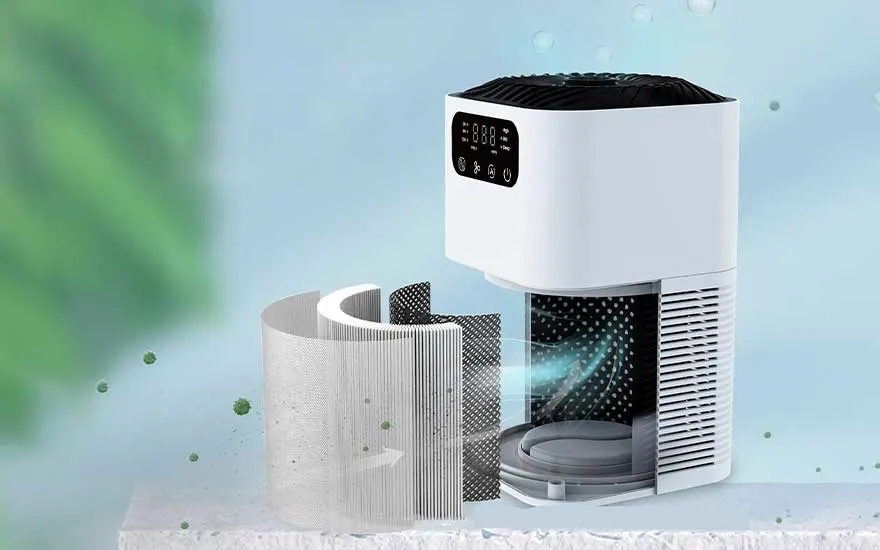
  • Filters: most air purifiers use multiple filters. A pre-filter traps larger particles such as dust and hair. A HEPA filter captures very small particles such as fine dust and pollen. An activated carbon filter helps remove odours and gases from the air through adsorption.
  • Ionisation: an ioniser releases electrically charged particles that cause small dust particles to clump together, making them easier to remove from the air.
  • UV-C light: eliminates micro-organisms such as bacteria and viruses.
  • 2-in-1 models: some devices combine air purification with extra functions such as humidifying or dehumidifying, giving you more control over the indoor climate.
Different types of air purifier technologies

An air purifier can clean the air in various ways. The technology a device uses determines which particles, odours or micro-organisms are removed from the air and how efficiently this is done.

Illustration of three filter stages with icons: a pre filter, a HEPA NanoProtect layer and an activated carbon filter for fine pollution.

Filter

The first filter in an air purifier is usually the pre-filter, which traps larger particles such as dust, hair and fluff. This is followed by the HEPA filter, which removes very small particles from the air such as fine dust, pollen, mould spores and smoke particles. A HEPA filter is recommended if you or someone in your household suffers from allergies or hay fever.

Pros and cons of a filter-based air purifier:
+ Removes small particles from the air such as fine dust and pollen.
+ Suitable for people with allergies and hay fever.
- Filters need to be replaced.

Illustration of three filter stages with icons: a pre filter, a HEPA NanoProtect layer and an activated carbon filter for fine pollution.

Adsorption

Some air purifiers use an activated carbon filter to remove odours and gases from the air. This filter works through adsorption. This means that odour and gas particles adhere to the surface of the carbon as air passes through the filter. An activated carbon filter is very useful if you want to eliminate smells from, for example, a litter tray or an open-plan kitchen. One con is that the filter becomes saturated over time and needs to be replaced to remain effective.

Pros and cons of an air purifier with an activated carbon filter
+ Very effective against cooking and pet odours.
+ Handy in an open-plan kitchen.
- The filter needs to be replaced.

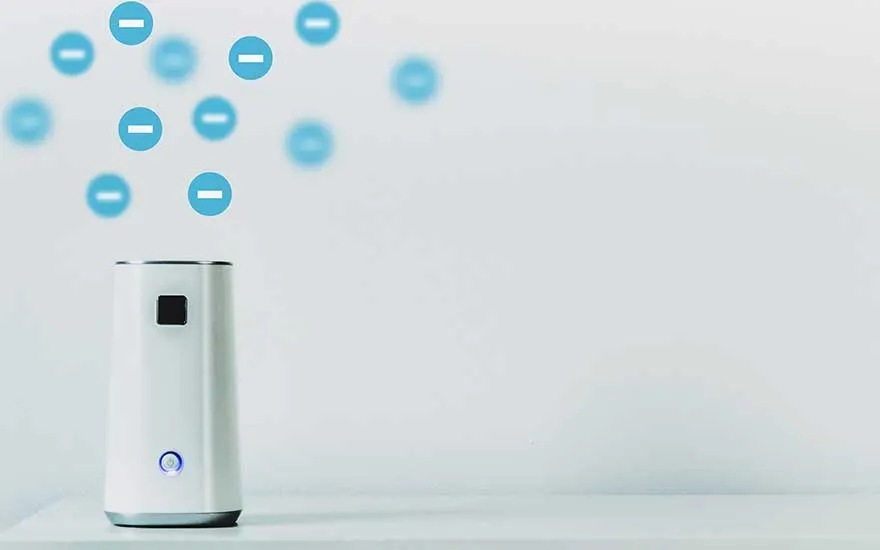
A compact white air ioniser stands on a table, releasing floating blue negative ion symbols to show it quietly neutralising dust and odours.

Ionisation

Some air purifiers are equipped with an ioniser, which adds negative ions to the air. These tiny electrically charged particles attach themselves to pollutants such as fine dust, pollen and mould spores, making them heavier so they fall out of the air more quickly.

Pros and cons of an air purifier with ionisation
+ Operates quietly.
+ Works without replacement filters.
- Dust is not captured by the air purifier itself.

What is an air purifier with ioniser?
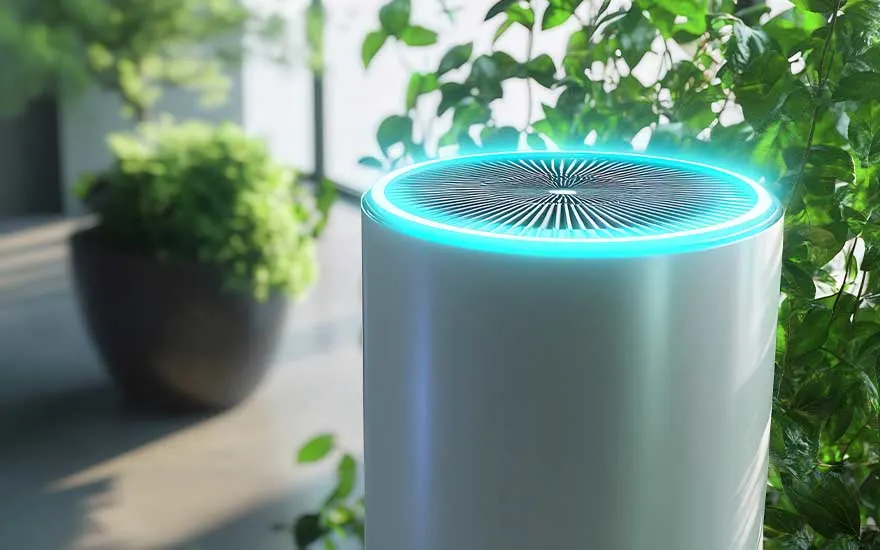
A sleek white air purifier with a glowing blue halo stands among lush green plants, symbolising naturally fresh and healthy indoor air.

UV-C light

Some air purifiers use UV-C light to combat micro-organisms in the air. This type of ultraviolet light can kill or inactivate bacteria, viruses and other micro-organisms as the air passes through the device. UV-C is usually combined with other technologies such as filters to purify the air as thoroughly as possible.

Pros and cons of an air purifier with UV-C light
+ Tackles bacteria and viruses.
+ Quiet operation.
- UV-C light does not remove dust, pollen or other particles.

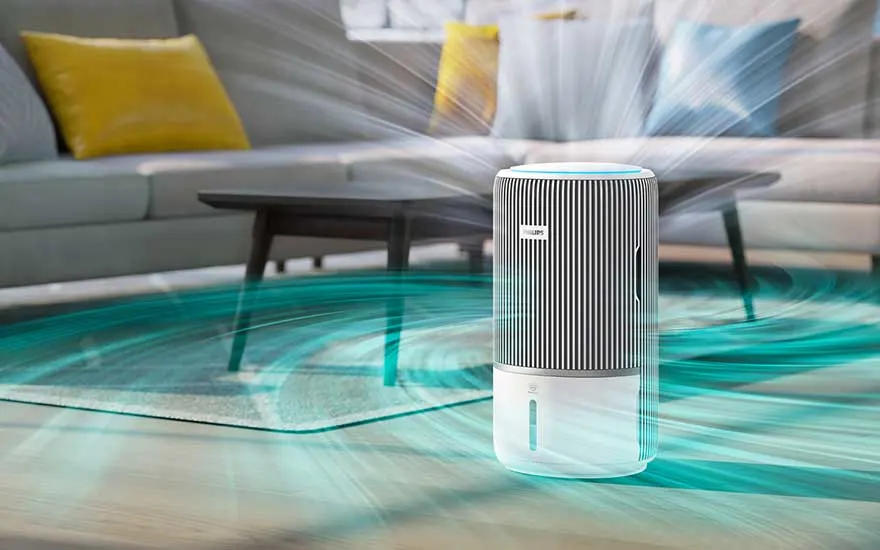
In a colourful living room, a striped air purifier emits strong turquoise airflow, swirling around the low table and sofa area.

2-in-1 models with dehumidifying and humidifying

Some air purifiers also function as dehumidifiers and humidifiers. With one device, you can both purify the air and control the humidity level in your home. This is useful when the air is too damp, for example if you have condensation or mould, or when it feels too dry due to the heating being on in winter.

Pros and cons of an air purifier with dehumidifying and humidifying
+ You only need to maintain one appliance.
+ Convenient for smaller spaces.
- Requires more maintenance.

Other important things to consider when choosing an air purifier

It’s not just the filter technology that determines which air purifier is right for you. If you suffer from allergies such as hay fever, want to use your air purifier in a large or open space, or would like to purify the air at night as well, it’s best to take this into account when making your choice.

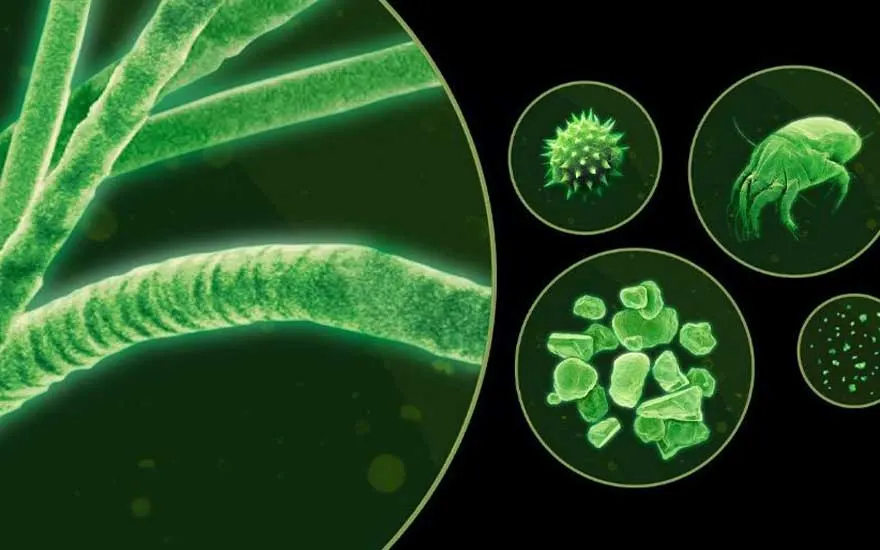
Microscopic green visuals show fibres, pollen, a dust mite and tiny particles, representing common indoor air pollutants and allergens.

Allergies, asthma, pollen and viruses

Si tu souffres d’allergies comme le rhume des foins ou d’asthme, un purificateur d’air peut aider à garder l’air de la maison plus propre. Un appareil équipé d’un filtre HEPA est particulièrement intéressant, car ce type de filtre capture des particules très fines comme le pollen, les acariens et de la poussière fine, ce qui permet de réduire tes symptômes à l’intérieur. Certains purificateurs d’air disposent en plus d’une fonction UV-C pour neutraliser encore plus efficacement les bactéries et les virus présents dans l’air.

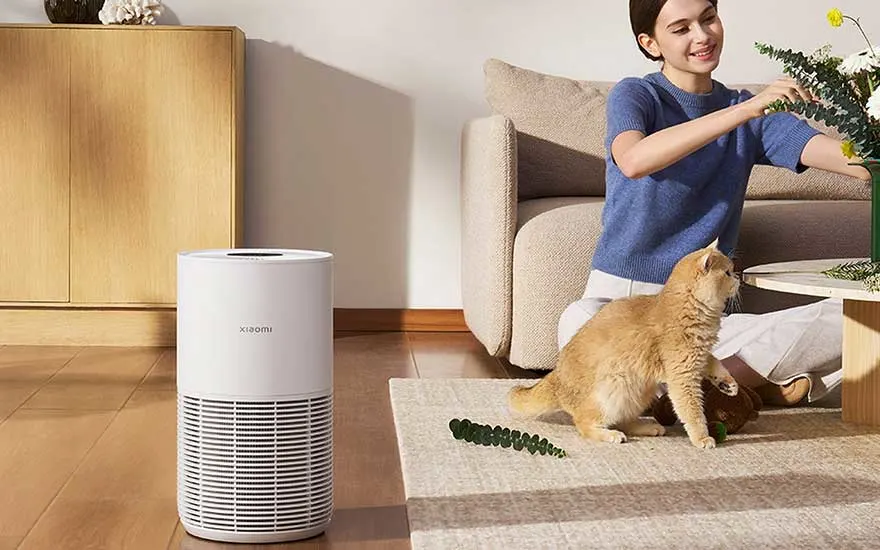
A woman arranges flowers by the sofa as a white Xiaomi air purifier stands on the wooden floor, while her curious cat speelt naast het kleed.

The room where you place the air purifier

If you use the air purifier in a large living room or open space, you’ll need a more powerful device that can purify more air per hour. For a bedroom, study or smaller room, a more compact model will be sufficient.

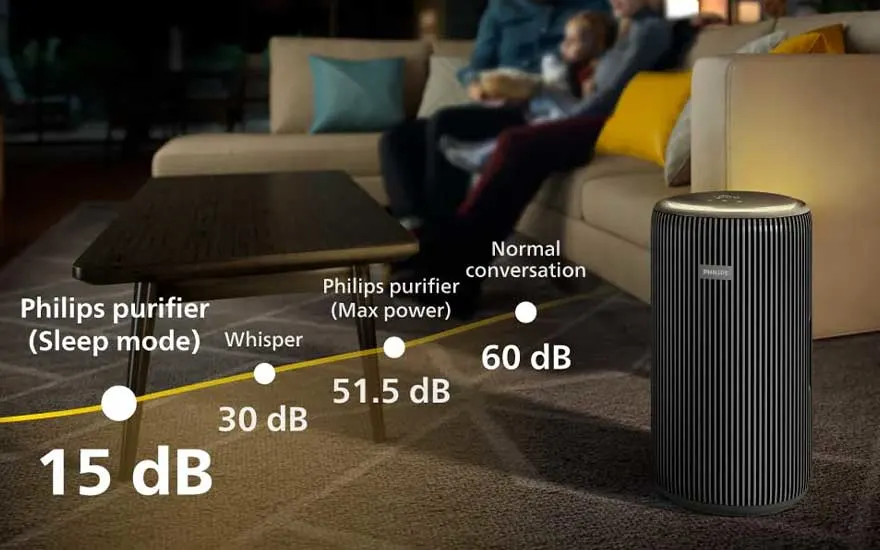
In a dim living room a chart compares the Philips air purifier’s quiet sound levels with a whisper and normal conversation on the sofa.

How much noise the air purifier makes

Si tu travailles dans un environnement calme ou si tu veux rester concentré, un purificateur d’air silencieux est important pour éviter toute gêne. Si tu utilises l’appareil dans ta chambre, un mode nuit ou sommeil est pratique pour le laisser fonctionner pendant la nuit et profiter d’un air plus propre pendant ton sommeil.

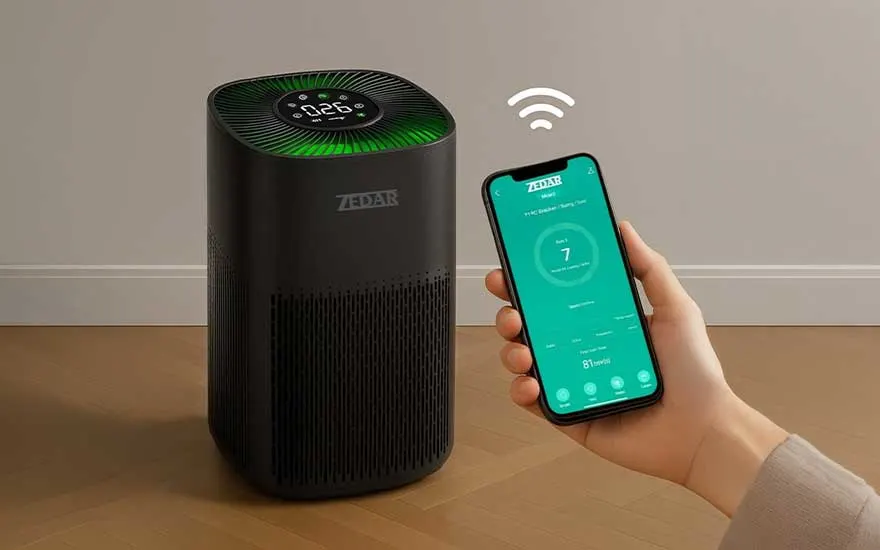
A black smart air purifier with green lit top stands on the floor, linked by Wi Fi to a smartphone displaying the current indoor air quality.

Smart features via an app

Some modern air purifiers can be controlled via an app on your smartphone. This allows you to monitor the air quality in your home in real time via built-in sensors, switch the device on or off remotely and set schedules. Many models also have an automatic mode that adjusts the fan speed when there is more dust or pollen in the air. The app can also track when the filter needs to be replaced and send you a notification. Some devices are compatible with voice assistants such as Alexa or Google Home.

Advice for choosing the right air purifier at MediaMarkt Belgium

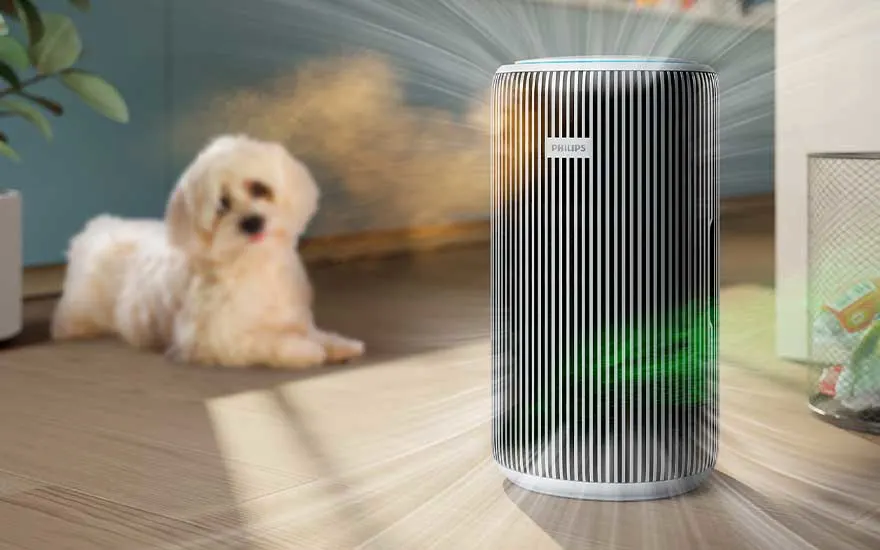
A fluffy white dog rests on the floor as a Philips air purifier draws in coloured pet and bin odours, leaving de woonkamer frisser en schoner.

Which air purifier suits you best depends on your situation at home. If you suffer from allergies such as hay fever, a device with a HEPA filter is a smart choice. If you use the air purifier in a larger space, choose a more powerful model that can purify more air per hour. In a smaller room, such as a study, a more compact model will be sufficient. In that case, pay attention to the noise level so you can work without being disturbed. If you use the device in your bedroom, it’s also important to consider the sound. A quiet mode is a real advantage in that case. Finally, check whether smart features such as app control are an added value for you.

The best air purifiers

Frequently asked questions about air purifiers

These articles might also be of interest to you